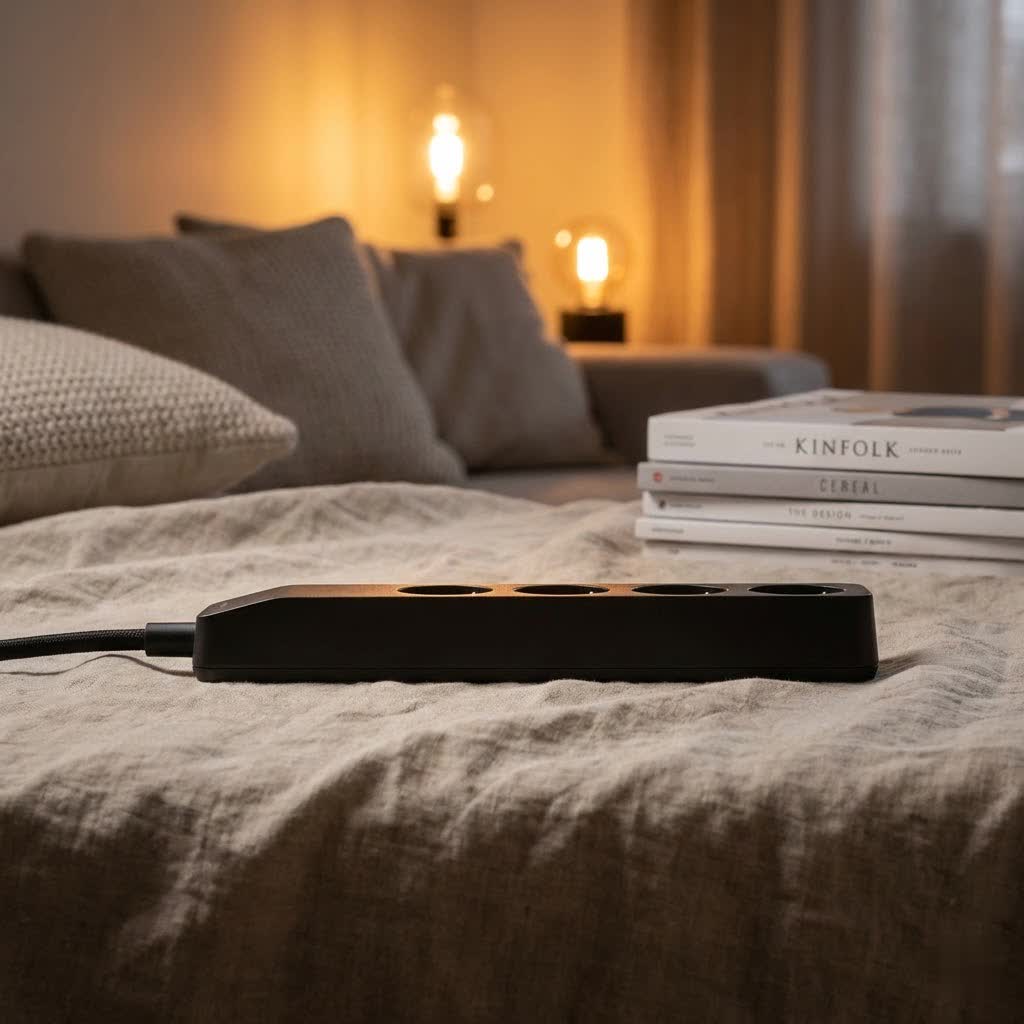
In our increasingly connected homes and offices, the sheer number of electronic devices vying for an outlet can quickly become overwhelming. From smartphones and laptops to smart home gadgets and entertainment systems, managing power safely is more crucial than ever. While basic power strips offer convenient outlet expansion, a power strip with a built-in circuit breaker takes your electrical safety to the next level, offering peace of mind and vital protection for your valuable electronics.

What is a Power Strip with Circuit Breaker and Why Do You Need One?
At its core, a power strip is a multi-outlet device that plugs into a single wall socket, allowing you to power several electronic devices simultaneously. However, a power strip with a circuit breaker is an enhanced version, featuring an integrated safety mechanism designed to prevent electrical overloads and short circuits. This crucial component acts like a miniature version of the circuit breakers found in your home’s main electrical panel.
Why is this important? Imagine plugging in too many high-power devices, such as a vacuum cleaner, a coffee maker, and a hairdryer, all into a single power strip. Without a circuit breaker, this excessive demand could draw more current than the power strip’s wiring can safely handle, leading to overheating, damaged equipment, or even an electrical fire. The circuit breaker’s primary function is to automatically “trip” or shut off the power when it detects an overload or a short circuit, thereby interrupting the dangerous flow of electricity and preventing potential hazards. This protective function safeguards not only your expensive electronics but also your home and family from electrical accidents.
Distinguishing Power Strips with Circuit Breakers from Surge Protectors
It’s common to confuse power strips with circuit breakers and surge protectors, but they serve different, albeit complementary, protective roles. A power strip’s circuit breaker is specifically designed to guard against overcurrents—situations where too much electrical current flows through the strip due to overloaded outlets or a faulty device. When the current exceeds the strip’s safe limit, the breaker trips, cutting power to prevent overheating and fire.
Conversely, a surge protector defends against voltage spikes, also known as power surges. These sudden, intense bursts of electrical voltage can be caused by lightning strikes, utility grid fluctuations, or even the cycling of large appliances. While a circuit breaker protects against sustained high current, it does little to mitigate these rapid, transient voltage spikes that can instantly fry sensitive electronics. Many modern power strips wisely integrate both a circuit breaker for overload protection and surge protection for voltage spikes, offering comprehensive electrical defense. The circuit breaker component primarily protects the strip’s internal wiring and, by extension, the connected devices from sustained overloads, ensuring the integrity of the electrical path.
Types of Power Strips: Finding Your Ideal Match
The market offers a diverse range of power strips, each with varying features and designs to suit different needs. Understanding these categories can help you select the most appropriate and safest option for your setup.
- By Number of Outlets: Power strips come with a varying number of receptacles, typically ranging from 3 to 12 or more.
- 3-4 Outlets: Ideal for basic needs, such as a bedside lamp and a phone charger.
- 5-6 Outlets: A popular choice for home offices or entertainment centers, accommodating computers, monitors, and various peripherals.
- 8+ Outlets: Best for high-demand setups like gaming stations, advanced workstations, or media centers where numerous devices require power.
- By Features: Beyond basic outlet expansion, power strips offer enhanced functionalities.
- Basic with Circuit Breaker: These provide essential overload protection, making them safer than power strips without this feature.
- With Surge Protection and Circuit Breaker: These units offer dual protection, shielding against both overcurrents and sudden voltage spikes, which is crucial for sensitive electronics like computers and televisions.
- Smart Power Strips with Circuit Breaker: Integrating smart technology, these power strips allow for remote control, scheduling, and energy monitoring via smartphone apps or voice assistants. They offer convenience while still providing critical overload protection.
- USB Charging Ports: Many power strips now include integrated USB-A and/or USB-C ports, providing convenient charging for mobile devices without needing separate adapters. However, consider future-proofing, as USB charging standards evolve rapidly.
- Travel Power Strips with Circuit Breaker: Compact and lightweight, these strips are designed for portability, often featuring universal outlets and essential overload protection for safe use while traveling.
- Heavy-Duty/Workshop Power Strips with Circuit Breaker: Built for more demanding environments like garages or workshops, these strips often feature robust construction, longer cords, and higher power ratings, all while maintaining circuit breaker protection.
- By Design: Power strips are available in various forms to fit different spaces.
- Traditional Strip: The most common flat bar design.
- Tower/Vertical: Space-saving designs that are great for desks or tight corners.
- Desk-Clamp: Attaches directly to a desk edge, keeping cords organized and accessible.
- Wall-Mountable: Can be securely fastened to a wall or under a desk for permanent setups.
Choosing the Right Power Strip with Circuit Breaker: A Buying Guide
Selecting the right power strip is more than just counting outlets; it’s about ensuring safety and compatibility with your devices. Here’s what to consider:
Assess Your Needs
|
Our Picks for the Best Power Strip in 2026
As an Amazon Associate I earn from qualifying purchases.
|
||
| Num | Product | Action |
|---|---|---|
| 1 | 10 Ft Ultra Thin Extension Cord, 5-Outlet Power Strip Surge Protector with 4 USB Ports (2 USB C), 1875W/15A, Low Profile Flat Plug, 1700 Joules, Wall Mount for Home Office, White |

|
| 2 | Amazon Basics Rectangle 6-Outlet, 600 Joule Surge Protector Power Strip, 2ft, Black, Small, 2-Pack |
|
| 3 | Surge Protector Power Strip - CHCORE 5Ft Braided Extension Cord with 8 Outlets with 4 USB (2 USB C) Charging Ports, Flat Plug Multi Plug Outlet Extender Charging Station for Home Office, ETL, White |
|
| 4 | Amazon Basics Surge Protector Power Strip, 6-Outlet with 200J Protection, 2ft Extension Cord, Rectangle, Black (2 Pack) |
|
| 5 | 6 Ft Surge Protector Power Strip - 8 Widely Outlets with 4 USB Ports, 3 Side Outlet Extender with 6 Feet Extension Cord, Flat Plug, Wall Mount, Desk USB Charging Station, ETL,White |
|
| 6 | Amazon Basics Surge Protector Power Strip, 6-Outlet, 790 Joules, LED Indicator, 6ft Extension Cord, White |
|
| 7 | Belkin 12-Outlet Surge Protector Power Strip w/ 12 AC Outlets & 8ft Flat Plug, UL-listed Heavy-Duty Extension Cord for Home, Office, Travel, Computer, Laptop, Charger - 3,940 Joules of Protection |
|
| 8 | Surge Protector Power Strip - HANYCONY 8 Outlets 4 USB (2 USB C) Charging Ports, Multi Plug Outlet Extender, 5Ft Braided Extension Cord, Flat Plug Wall Mount Desk Charging Station for Home Office ETL |
|
| 9 | Pink Extension Cord with Surge Protector - 5 FT Kawaii Power Strip, Cute Extension Cord with 6 USB(3 USB C) and 8 Outlets, Pink Desk Accessories for Girl Cute Kawaii Room Decor Gifts Office Dorm Home |
|
| 10 | 3FT Ultra Flat Plug Extension Cord Power Strip with 3 Outlets, Patented Detachable Ultra-Thin Outlet Cover Concealer & Ultra-Flat Plug, Max. 13A 125V 1625W ETL Listed, White Color |
|
Start by determining how many devices you need to power and their individual wattage requirements. Add up the total wattage of all devices you plan to connect to the strip. This will help you avoid overloading. Also, think about where the power strip will be located. Do you need a long cord, or is a compact design more suitable? Will it be exposed to any moisture, requiring a specialized outdoor or wet-environment-rated strip?
Prioritize Safety Certifications
Always look for power strips that bear certification marks from recognized testing laboratories such as UL (Underwriters Laboratories), CE (Conformité Européenne), or CSA (Canadian Standards Association). These certifications indicate that the product has undergone rigorous testing and meets strict safety standards, verifying its design for preventing hazards like electrical fires and shocks. A UL certification offers particular peace of mind in North America.
Check Electrical Specifications
The power strip’s electrical ratings are critical. The built-in circuit breaker typically has an amperage rating, often 15A or 20A, which dictates the maximum current the strip can safely handle. Exceeding this limit will cause the breaker to trip. For comprehensive protection, especially for sensitive electronics, also check the surge protector’s Joule rating (a higher number indicates better protection) and clamping voltage (lower is better).
Consider Design and Functionality
- Cord Length: Choose a cord long enough to reach your wall outlet without needing an extension cord, but not so long that it creates a tripping hazard or excessive clutter.
- Outlet Spacing: Look for wide-spaced or rotating outlets to accommodate bulky power adapters without blocking adjacent receptacles.
- USB Charging Ports: If you frequently charge mobile devices, integrated USB ports can be very convenient. Verify the output amperage of these ports to ensure they can charge your devices efficiently.
- Smart Features: For added control and energy management, consider smart power strips, which allow you to control individual outlets or schedule power cycles.
Read Reviews
Before making a final decision, consult reviews from other users. Real-world feedback can provide valuable insights into a product’s durability, performance, and any potential quirks. Pay attention to both positive and negative comments to get a balanced view.
Top Power Strips with Integrated Circuit Breakers
The market is flooded with high-quality power strips featuring integrated circuit breakers, offering diverse solutions for every need. While specific model recommendations can quickly become outdated, top-rated products consistently share several key attributes. These typically include robust construction with fire-resistant materials, a reliable circuit breaker that trips effectively under overload, and, in many cases, superior surge protection with a high Joule rating.
Leading brands often provide models with thoughtful designs, such as widely spaced outlets to accommodate large power bricks, varying cord lengths for flexible placement, and convenient features like individual outlet switches or USB charging ports. For instance, some popular choices are recognized for their excellent build quality, making them suitable for demanding environments like workshops, while others are praised for their sleek designs and smart features, perfect for modern home offices or entertainment centers. When exploring options, prioritize products from reputable manufacturers known for their commitment to electrical safety and product longevity. Always verify the specifications against your power needs and look for evidence of robust internal circuit breaker functionality.
Essential Safety Tips for Using Power Strips with Circuit Breakers
Even with a power strip equipped with a circuit breaker, safe usage practices are paramount to prevent electrical hazards and extend the life of your devices.
- Do Not Overload: Never exceed the power strip’s maximum amperage or wattage rating. The circuit breaker is there to protect against overloads, but consistently pushing its limits can degrade its effectiveness over time. Avoid plugging in “heavy-draw” appliances like space heaters, microwave ovens, refrigerators, or hair dryers into a power strip, as these should typically be plugged directly into a wall outlet.
- Avoid “Daisy-Chaining”: Never plug one power strip into another. This practice, known as daisy-chaining, can easily overload the wall outlet and the entire electrical circuit, posing a significant fire risk.
- Use in Appropriate Environments: Ensure your power strip is rated for its intended environment. Indoor power strips are not designed to withstand moisture or extreme temperatures and should never be used outdoors or in damp areas like bathrooms or basements. Look for weatherproof or outdoor-rated strips if needed.
- Do Not Cover: Never place a power strip under rugs, carpets, furniture, or any other material that could trap heat. Proper ventilation is essential to prevent overheating.
- Regular Inspection: Periodically inspect your power strip for signs of wear and tear, such as frayed cords, cracked housings, or loose outlets. If the strip feels hot to the touch, if the circuit breaker trips frequently, or if you notice any flickering lights or buzzing sounds, unplug it immediately and replace it.
- Ensure Proper Grounding: Always use power strips with a three-prong grounded plug and ensure it is plugged into a properly grounded wall outlet. Never use adapters that defeat the grounding prong.
- Unplug When Not in Use: If a power strip and its connected devices are not in use for an extended period, or during an electrical storm, unplugging it from the wall outlet can offer an extra layer of protection and save standby power.
Conclusion
In a world increasingly reliant on electronic devices, a power strip with a circuit breaker is an indispensable tool for maintaining electrical safety and convenience. It provides crucial protection against overloads and short circuits, safeguarding your valuable equipment and reducing the risk of electrical fires. By understanding the distinctions between circuit breakers and surge protectors, carefully assessing your needs, and adhering to essential safety guidelines, you can make an informed choice that enhances your electrical setup. Remember, investing in a high-quality, certified power strip and using it responsibly is a small effort that yields significant peace of mind.
What are your experiences with power strips and circuit breakers in your home or office? Share your thoughts and tips below!
Frequently Asked Questions
What does a circuit breaker in a power strip do?
A circuit breaker in a power strip is an automatic safety switch that cuts off electrical power if the strip is overloaded or experiences a short circuit. This prevents excessive current flow, protecting connected devices from damage and significantly reducing the risk of overheating and electrical fires.
Is a power strip with a circuit breaker also a surge protector?
Not necessarily. While many modern power strips combine both features, a circuit breaker primarily protects against overcurrents (overloads and short circuits), while a surge protector guards against sudden voltage spikes. Always check the product specifications for both “circuit breaker” and “surge protection” features, along with a Joule rating for surge protection, to ensure comprehensive defense.
Can I plug a space heater into a power strip with a circuit breaker?
It is generally not recommended to plug high-wattage appliances like space heaters, refrigerators, or microwave ovens into any power strip, even one with a circuit breaker. These devices draw significant power and should ideally be plugged directly into a dedicated wall outlet to prevent overloading the circuit and tripping the breaker.
How do I know if my power strip is overloaded?
Signs of an overloaded power strip include the circuit breaker tripping (a button popping out or a switch flipping off), the strip feeling hot to the touch, flickering lights on connected devices, or a buzzing sound emanating from the strip. If you notice any of these, immediately unplug devices and reduce the load.
What certifications should I look for when buying a power strip with a circuit breaker?
When purchasing a power strip, always look for certifications from nationally recognized testing laboratories such as UL (Underwriters Laboratories), CE (Conformité Européenne), or CSA (Canadian Standards Association). These marks indicate that the product has met stringent safety standards and has been tested for potential hazards like electrical shock and fire.
Get our weekly buyer guide
Practical specs, not advice. Unsubscribe anytime.
