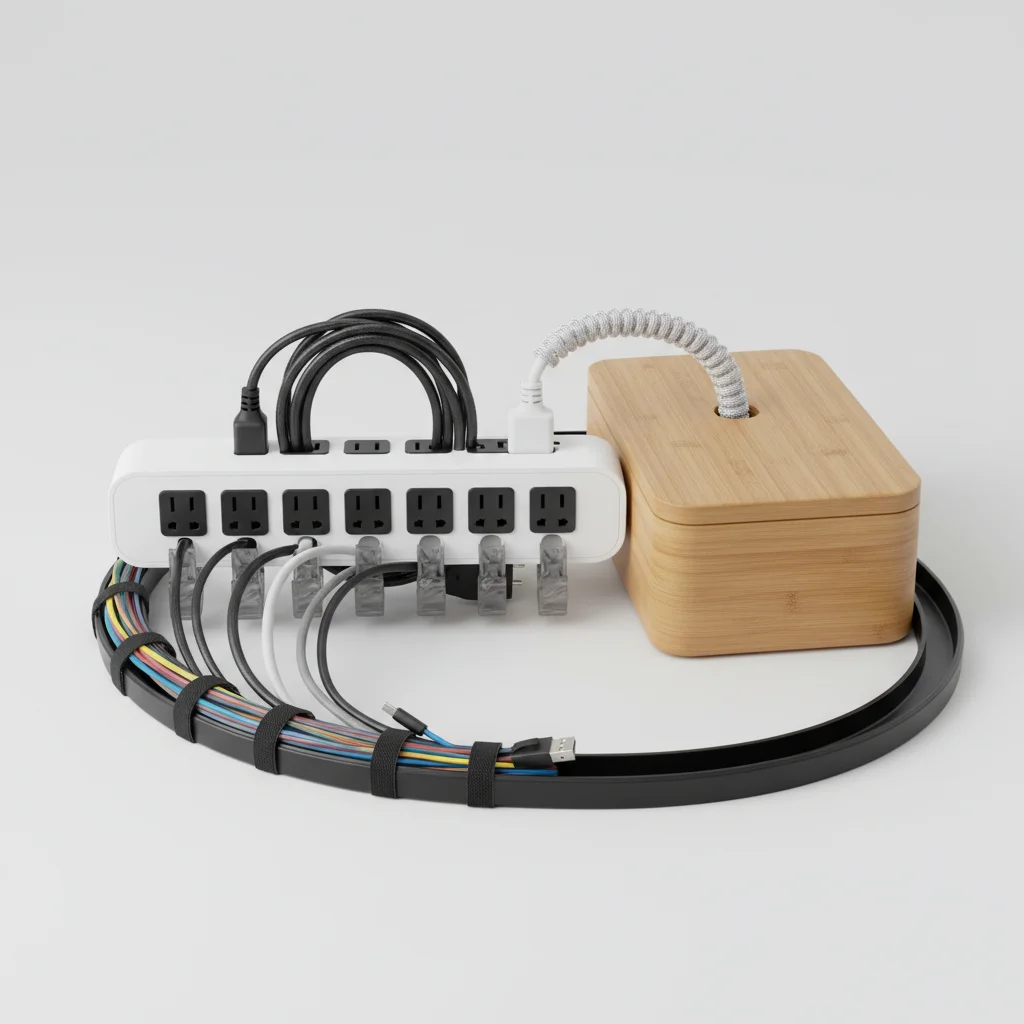
Effective power strip cord management is crucial for maintaining an organized, safe, and aesthetically pleasing environment. By implementing smart strategies, you can eliminate unsightly cable clutter, prevent tripping hazards, and extend the lifespan of your electronics. This guide will walk you through five essential techniques to achieve a tidy and functional setup.
Why Cord Management Matters for Your Power Strips
Beyond the visual appeal, proper cord management significantly enhances safety. Tangled cords can become fire hazards, especially when pinched or placed under heavy objects. They also make cleaning difficult and can lead to accidental disconnections, potentially damaging sensitive electronics. A well-managed system ensures better airflow around devices, which can prevent overheating and improve performance.
Essential Tools for Effective Cord Organization
To tackle cord clutter effectively, you’ll need a few key tools. Cable ties, whether reusable Velcro straps or single-use zip ties, are indispensable for bundling wires together. Cable sleeves or wraps offer a more polished look, enclosing multiple cords into a single, neat tube. Adhesive cable clips are perfect for securing individual wires along desks or walls, preventing them from dangling. For more extensive setups, a cable management box can hide an entire power strip and its associated cords, providing a clean, dust-free solution.
- Reusable Velcro cable ties for flexible bundling
- Adhesive cable clips for securing individual wires
- Cable management boxes to conceal power strips and excess cords
- Sleeve wraps for a streamlined, professional appearance
- Desk grommets for routing cables through surfaces
Strategies for Taming Your Power Strip Cables
|
Our Picks for the Best Power Strip in 2026
As an Amazon Associate I earn from qualifying purchases.
|
||
| Num | Product | Action |
|---|---|---|
| 1 | 3FT Ultra Flat Plug Extension Cord Power Strip with 3 Outlets, Patented Detachable Ultra-Thin Outlet Cover Concealer & Ultra-Flat Plug, Max. 13A 125V 1625W ETL Listed, White Color |

|
| 2 | 10 Ft Ultra Thin Extension Cord, 5-Outlet Power Strip Surge Protector with 4 USB Ports (2 USB C), 1875W/15A, Low Profile Flat Plug, 1700 Joules, Wall Mount for Home Office, White |
|
| 3 | Belkin 12-Outlet Surge Protector Power Strip w/ 12 AC Outlets & 8ft Flat Plug, UL-listed Heavy-Duty Extension Cord for Home, Office, Travel, Computer, Laptop, Charger - 3,940 Joules of Protection |
|
| 4 | Amazon Basics Surge Protector Power Strip, 6-Outlet, 790 Joules, LED Indicator, 6ft Extension Cord, White |
|
| 5 | Amazon Basics Surge Protector Power Strip, 6-Outlet with 200J Protection, 2ft Extension Cord, Rectangle, Black (2 Pack) |
|
| 6 | Surge Protector Power Strip - HANYCONY 8 Outlets 4 USB (2 USB C) Charging Ports, Multi Plug Outlet Extender, 5Ft Braided Extension Cord, Flat Plug Wall Mount Desk Charging Station for Home Office ETL |
|
| 7 | Surge Protector Power Strip - CHCORE 5Ft Braided Extension Cord with 8 Outlets with 4 USB (2 USB C) Charging Ports, Flat Plug Multi Plug Outlet Extender Charging Station for Home Office, ETL, White |
|
| 8 | Amazon Basics Rectangle 6-Outlet, 600 Joule Surge Protector Power Strip, 2ft, Black, Small, 2-Pack |
|
| 9 | Pink Extension Cord with Surge Protector - 5 FT Kawaii Power Strip, Cute Extension Cord with 6 USB(3 USB C) and 8 Outlets, Pink Desk Accessories for Girl Cute Kawaii Room Decor Gifts Office Dorm Home |
|
| 10 | 6 Ft Surge Protector Power Strip - 8 Widely Outlets with 4 USB Ports, 3 Side Outlet Extender with 6 Feet Extension Cord, Flat Plug, Wall Mount, Desk USB Charging Station, ETL,White |
|
One of the most effective strategies is to group cables by destination. For example, all cords leading to your monitor should be bundled together, separate from those going to your printer or charging station. Utilize the space behind furniture or under desks to hide power strips and excess cable length. Consider using a short power strip for devices that are close together and a longer one for those spread out, minimizing unnecessary cable slack.
Advanced Techniques for a Seamless Setup
For a truly seamless look, consider integrating power strips into your furniture. Some desks come with built-in cable trays or grommets that allow you to route wires discreetly. Wall-mounted power strips can also help keep cords off the floor, especially in areas with limited space. When planning your setup, always measure the required cable length to avoid having too much slack, which is often the primary cause of clutter. Remember to leave a little slack for flexibility, but not so much that it creates a mess.
Maintaining Your Organized Power Strip System
Once you’ve organized your power strip cords, regular maintenance is key to keeping it tidy. Periodically check for new devices that might introduce additional cables and integrate them into your existing system. Dusting and cleaning around your power strips and cables will also prevent dust buildup, which can be a fire hazard. By consistently applying these management techniques, you can enjoy a safer, more organized, and visually appealing space.
Get our weekly buyer guide
Practical specs, not advice. Unsubscribe anytime.
